Today’s Audience: Practitioners looking for a space to work.
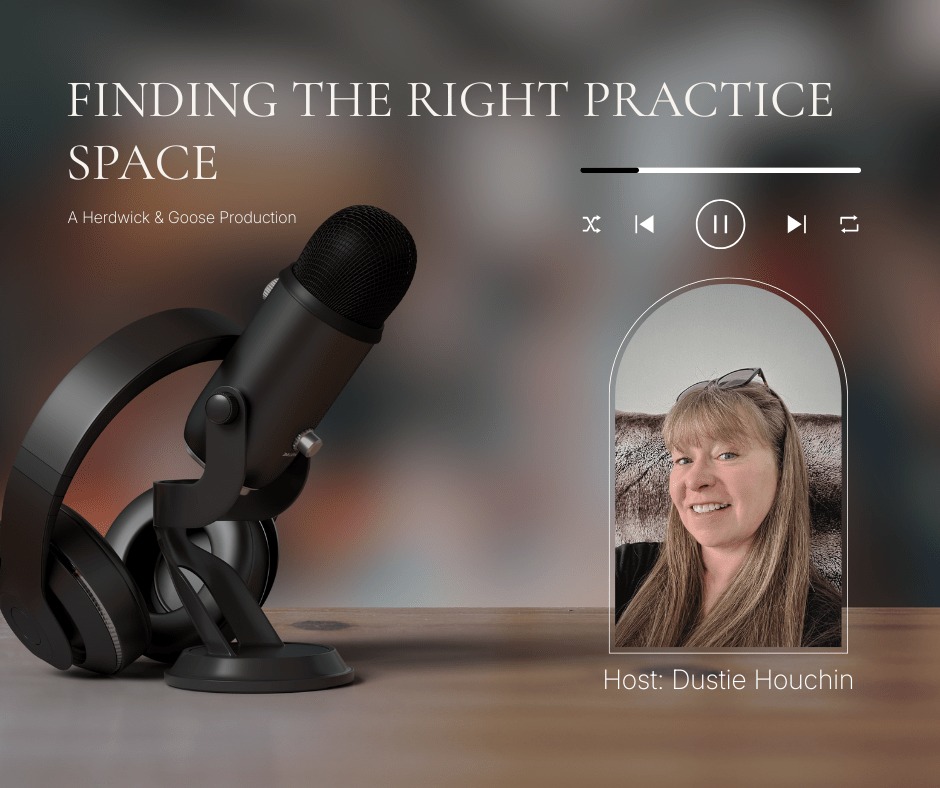
Hello, and welcome. I’m Dustie, speaking on behalf of Herdwick & Goose. This is a short audio note for our practitioner community—an opportunity to share useful thinking, practical perspective, and conversations that support the work you do.
Last time, I touched on some of the terms used in business because I do not want you to feel overwhelmed by language that may never have been explained clearly to you as a new graduate.
Fundamentally, all business terms boil down to an action.
- Operations are the actions a business performs;
- Finance is the way we manage income and expenses;
- Marketing is understanding our customers;
- Branding is making sure our customers understand us;
- Sales is the conversations we have to serve our customers;
- Strategy is the map we use to reach our destination;
- Leadership is steering the ship and being ready to change direction when needed;
- Legal & Compliance is following protocols that keep us and our customers safe;
- Customer Service is aligning what we do with client expectations.
With this in mind, let’s take one step forward.
Every practitioner needs a space from which to work, so today I want to walk through the process clearly and practically. The aim is to help you choose a space that suits both your current needs and the future shape of your practice. If you’re already in a practice but have doubts about staying, keep reading and use these questions to guide your next decision.
Finding the right space for a practice
Finding the right space is essential to any practitioner and there are some key considerations to be made that often get overlooked.
For example: If a client has asked me to locate a practice space for them, I would want to know the answers to the following questions:
- Where is my client on their journey? Are they a new graduate with zero customers or are they an established practitioner?
- Will they be using the room full or part-time?
- What are the key needs of their clinical modality? In other words what type of space or equipment do they need for the services they provide?
- Do they need a waiting area?
- Are they happy working in a multi-modality practice? Such as a wellness centre or medical consulting offices.
- Does their modality have any specific requirements, such as disabled access, specialist equipment or a particularly confidential space?
- Are they planning on being there short or long term?
- What are their financial boundaries? In other words, what can they afford to pay each month or year?
There are other questions too, but hopefully you get the idea.
While choosing a room based on affordability is the most common starting point, I would recommend a more considered approach. A good decision needs to be based on a clear understanding of the practitioner, their work ethic, personal drive, clinical needs and background support. Let me explain why.
Affordability is closely linked to the funds a practitioner has available and the profit their business can realistically generate. Profitability, in turn, is linked to the success of the business, which is influenced by the practitioner’s drive, focus, location, offer and ability to attract the right customers.
Let’s Meet Someone
Rebecca is an associate in someone else’s practice, but she also wants to start building something of her own. Her plan is to grow a small practice gradually, so that when she leaves her associate position in one or two years’ time, she already has an income and a developing client base.
Rebecca came to me explaining her needs, and I went through my usual assessment. Once I was clear about her personal and professional plans, we got to work. Knowing that she only wanted the room a couple of days a week, but with the opportunity for long-term growth, we chose medical consulting rooms in a large wellness centre for her start-up project.
The rationale: Having evaluated the turnover of practitioners at the multi-modality location, it became clear that expansion at a later date should be easy because practitioners frequently came and went, as they moved to new chapters. This meant Rebecca could start with two days a week and then, expand her hours as her practice grew.
Knowing that the landlords of multi-modality practices value loyal customers, the probability that Rebecca would get what she needed was high.
Moreover, being in a multi-modality wellness centre gave Rebecca easy access to cross-professional referrals and she was able to market her business on their website and in their newsletter, which took immediate pressure away. The building housed a very nice waiting area and front of house reception services were included in the rent, meaning she didn’t have to worry about booking systems or taking calls herself on days she was in practice.
Had Rebecca chosen a small one-room office of her own, tucked away in a less expensive part of town, she would have needed to manage her diary carefully so clients did not clash, see fewer clients each day, handle calls, bookings and cancellations, market the business herself, and pay for every expense linked to the practice, from furniture to DIY.
The irony is that many practitioners see serviced offices as expensive and excessive because they do not evaluate the whole picture. That is why I recommend looking at the long-term implications before jumping headfirst into any decision. Once you compare the cost of renting a room on your own with the value of having someone else do much of the work for you, it becomes easier to see why serviced offices are often a sensible solution. As with all business decisions, however, it depends on the practitioner.
Rebecca decided to take on the serviced office space, so she did not have to worry about anything. With the principal of her associate practice being flexible, she chose to use the room on Mondays and Fridays, so acute patients could be seen twice in one week if necessary.
Two years on, Rebecca is thriving. She left her associate position at the end of her first year, expanded her hours in the wellness centre, and is now one of its most established practitioners. She works four days a week, is fully booked, and uses Thursdays for admin and writing content for her audience.
Rebecca’s approach is not for everyone, but she wanted an easy life. She didn’t want to take calls, worry about decorating and DIY or have to manage a website. She just wanted to be an osteopath. For her, it was the perfect solution. It gave her a professional and highly polished location from where to run her business. She could charge well because the location looked the part and clients loved coming there.
Everyone was happy.
Reflection for today
If you’re new to practice, use this blog to think carefully before jumping headfirst into a contract.
If you’re already in practice, when did you last sit down and evaluate the costs of your business to decide if you’re in the right location for you and for your customers? Are there things you might like to change that could reduce stress and add value to your brand?
Take-home
Get Help
If you take one thing from Rebecca’s story, let it be this: the right space is not simply the cheapest space. It is the space that supports the way you want to work, the clients you want to serve, and the business you are trying to build. If you’d like to sit down and talk through your plans so that you can get yourself set up the right way, book a consult today. Making the right decision upfront can save time, money and stress, so the investment is worth it.
If you’d like help choosing a space that fits with your long-term plans, book a consultation today and let’s get you on the right track.
If you would just like to stay in touch and get first refusal of any events or free workshops we run, subscribe to our mailing list now. Unsubscribe any time with ease.
Dustie Houchin is the Executive Director of Herdwick & Goose Limited. She has been in clinical practice since 1998, and taught practice development for more than 14 years.


You must be logged in to post a comment.